research | Mobile App design
Helping people in BC through wildfires
Helping people in BC through wildfires
Helping people in BC through wildfires
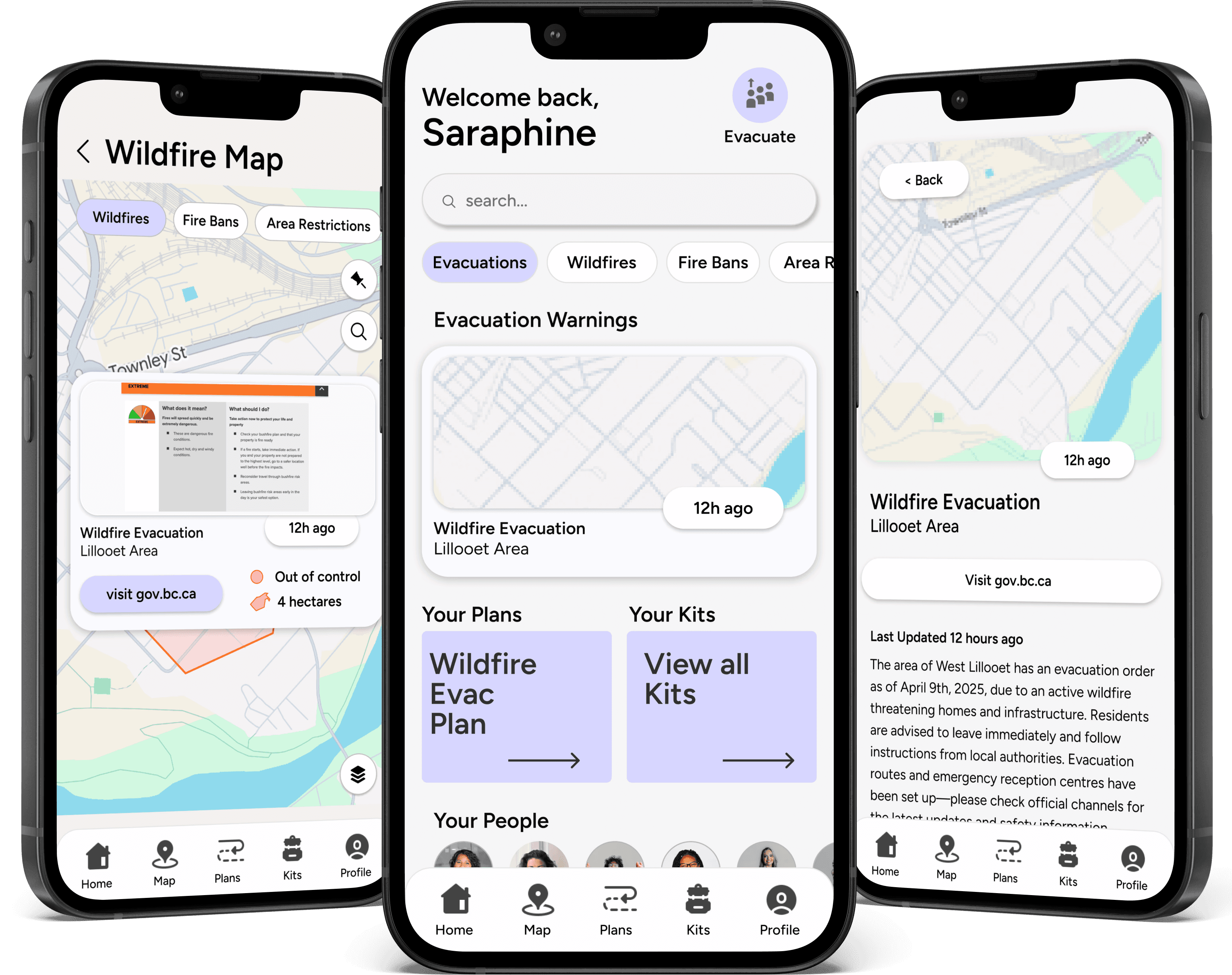
Luma helps people stay prepared and confident during wildfires with simple steps, real-time alerts, and easy plan sharing—building stronger, connected communities.
Luma helps people stay prepared and confident during wildfires with simple steps, real-time alerts, and easy plan sharing—building stronger, connected communities.
Luma helps people stay prepared and confident during wildfires with simple steps, real-time alerts, and easy plan sharing—building stronger, connected communities.
Avery Chang
Hannah Gagnon
Josephine Diplock
UX Research
Visual Design
Interaction Design
Prototyping
the problem: Why wildfire preparedness is hard
Wildfires have become an increasingly serious threat in Canada, yet many people remain unprepared. Most lack the tools, support, knowledge, or time to plan effectively, making it difficult to stay safe during an emergency.
Preparation for wildfires can be overwhelming. People often don’t know where to access reliable information, how to organize resources, or what steps to take before, during, and after an emergency. This gap inspired the development of Luma.
Acres of forest burned since May 2025
Acres of forest burned on average
more hectares burned vs 10 years ago
the solution: introducing luma
Luma turns wildfire preparedness into a supportive companion, providing real-time alerts, step-by-step guidance, and easy ways to share plans and resources. It helps individuals and communities in BC stay safe when it matters most.
The app puts all critical wildfire info and resources into one place, simplifies decision-making during stressful moments, and encourages community support by letting users coordinate plans with friends, family, and neighbours.
the problem: Why wildfire preparedness is hard
Wildfires have become an increasingly serious threat in Canada, yet many people remain unprepared. Most lack the tools, support, knowledge, or time to plan effectively, making it difficult to stay safe during an emergency.
Preparation for wildfires can be overwhelming. People often don’t know where to access reliable information, how to organize resources, or what steps to take before, during, and after an emergency. This gap inspired the development of Luma.
Acres of forest burned since May 2025
Acres of forest burned on average
more hectares burned vs 10 years ago
the solution: introducing luma
Luma turns wildfire preparedness into a supportive companion, providing real-time alerts, step-by-step guidance, and easy ways to share plans and resources. It helps individuals and communities in BC stay safe when it matters most.
The app puts all critical wildfire info and resources into one place, simplifies decision-making during stressful moments, and encourages community support by letting users coordinate plans with friends, family, and neighbours.
Discovery
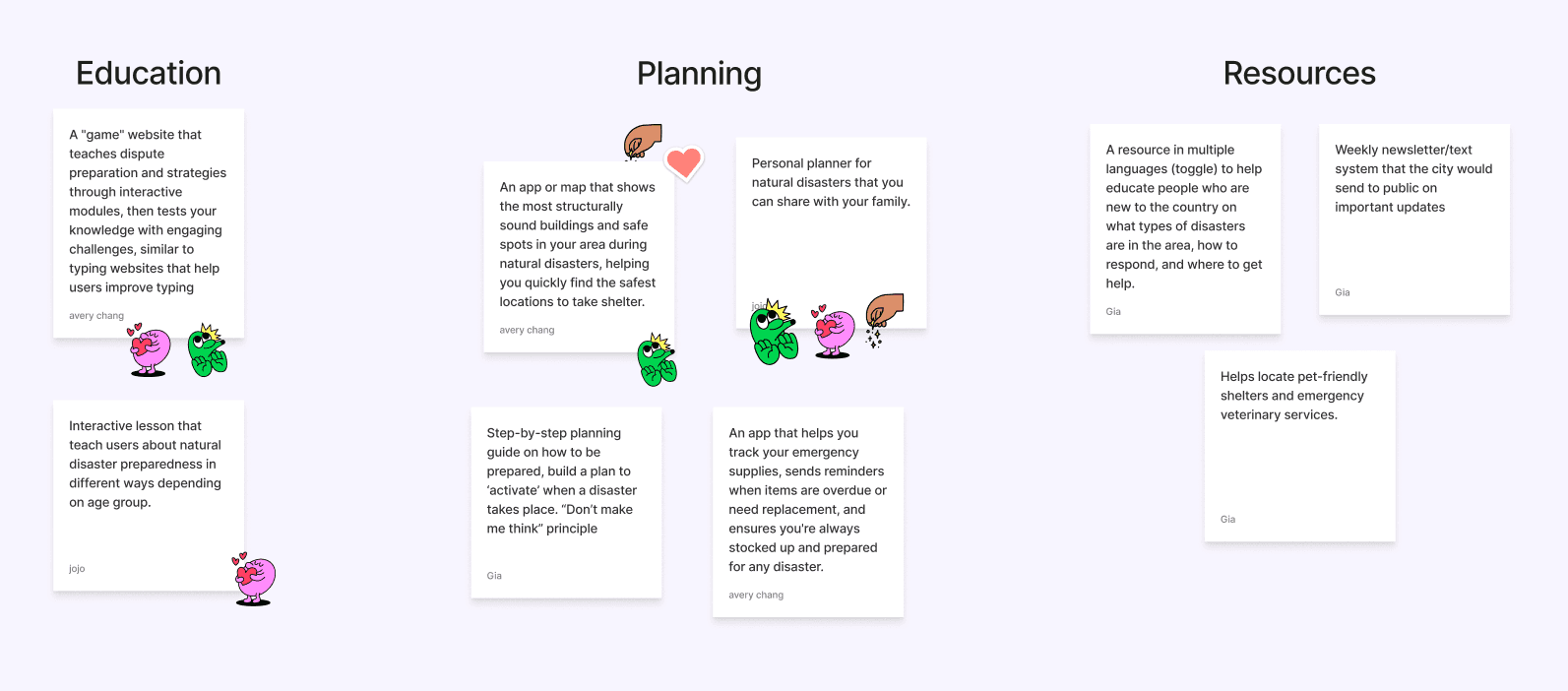
The first step of the project was to explore a wide range of ideas, identifying unmet pain points and imagining digital solutions that didn’t yet exist.
We generated over 50 ideas, categorized and reviewed them, and used dot-voting to narrow down the most promising concepts. After pitching and refining these, Luma was born.
research: understanding users & context
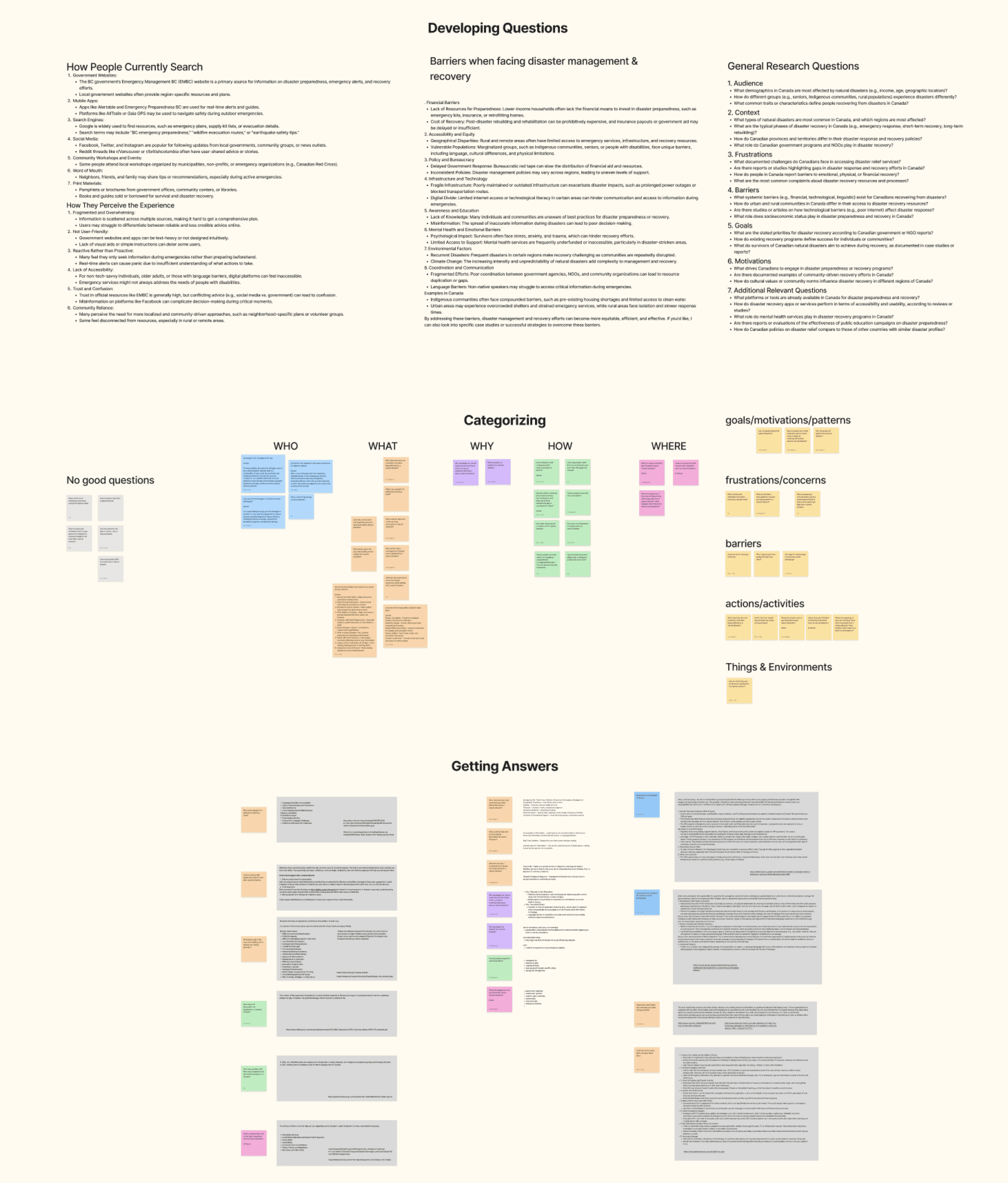
After defining our idea as a personal planner for natural disasters, we conducted secondary research to better understand user needs and the wildfire context.
To stay focused, we structured our research around key areas:
Developing questions across the preparation, management, and recovery stages of wildfires.
Categorizing the who, what, why, how, and where affected.
Gathering and analyzing existing data to gain a deeper understanding of current challenges and resources.
research: understanding users & context
After defining our idea as a personal planner for natural disasters, we conducted secondary research to better understand user needs and the wildfire context.
To stay focused, we structured our research around key areas:
Developing questions across the preparation, management, and recovery stages of wildfires.
Categorizing the who, what, why, how, and where of affected users.
Gathering and analyzing existing data to gain a deeper understanding of current challenges and resources.
Discovery
After defining our idea as a personal planner for natural disasters, we conducted secondary research to better understand user needs and the wildfire context.
To stay focused, we structured our research around key areas:
Developing questions across the preparation, management, and recovery stages of wildfires.
Categorizing the who, what, why, how, and where of affected users.
Gathering and analyzing existing data to gain a deeper understanding of current challenges and resources.
Communication &
Awareness -->
Wildfire info is scattered and confusing.
Language barriers make access harder.
Mixed messages cause more confusion.
Everyone’s experience with wildfires is different.
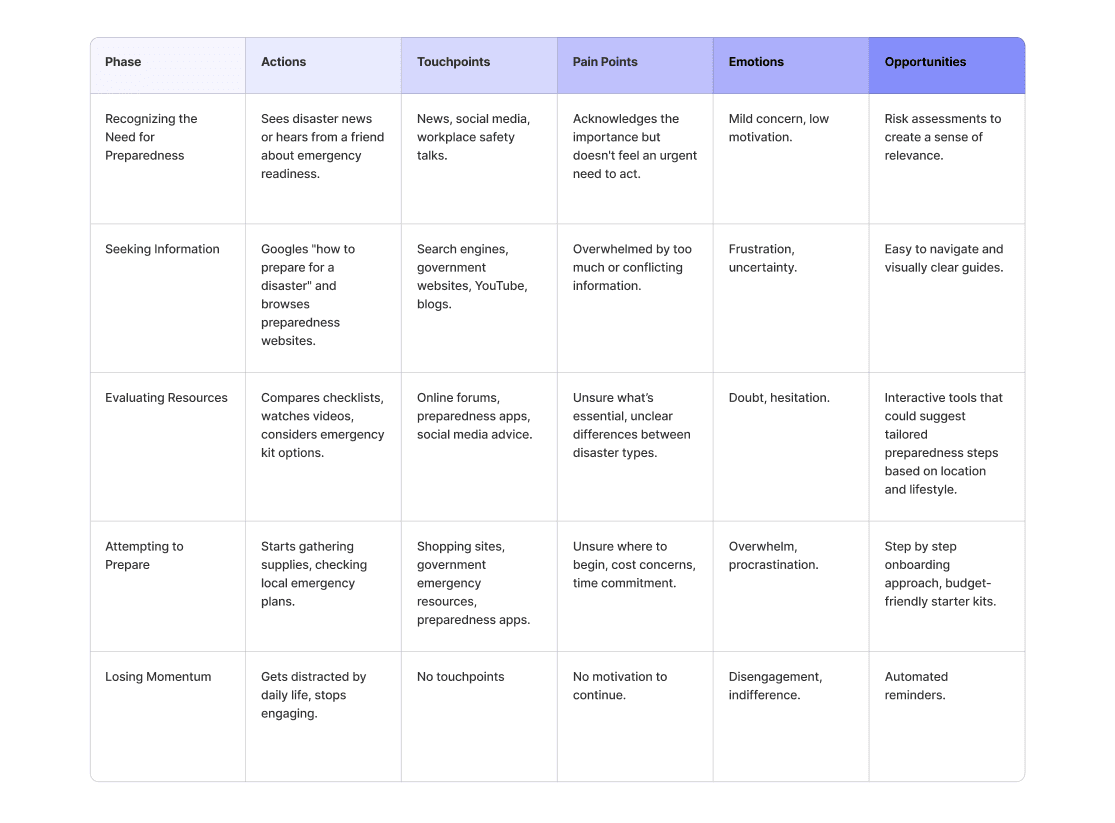
Insight Tools: Turning Research into Actionable Concepts
We used insight tools to make sense of our research findings and translate them into clear design directions for Luma.
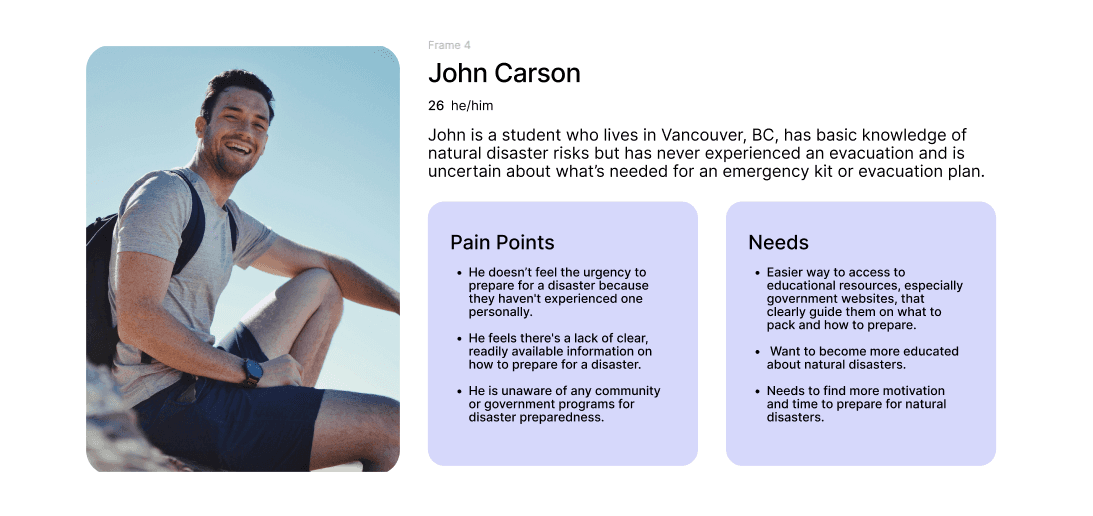
We created a how might we statement, UX Map and a User Persona to organize and make sense of data collected from interviews and secondary research. These tools helped us identify key pain points, motivations, and behaviours, making sure our design decisions addressed real user needs and informed the features of Luma.
Rural and vulnerable groups get limited support and services.
Aid is slow, shelters are packed, and mental health help is scarce.
Emergency gear and insurance are too expensive for many families.
Recovery & Information -->
Insurance is often unclear or doesn’t cover enough.
Recovery is slow with little long-term help.
Info is scattered and hard to find.
People are left unsure where to turn next.
Research & Insights: Understanding Users & Identifying Patterns
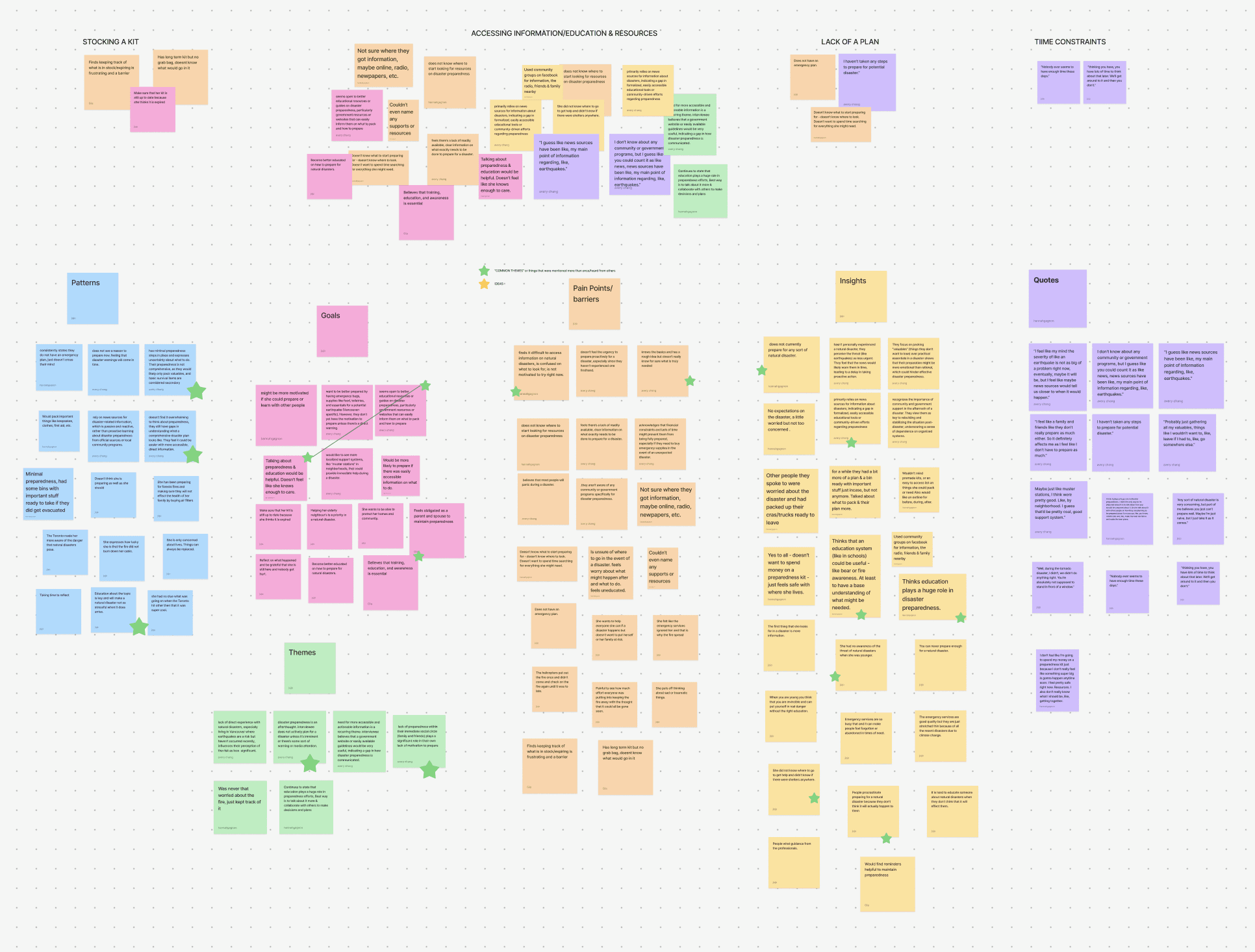
We conducted user interviews and surveys to understand real experiences with wildfires, then synthesized our findings to uncover key themes and actionable insights.
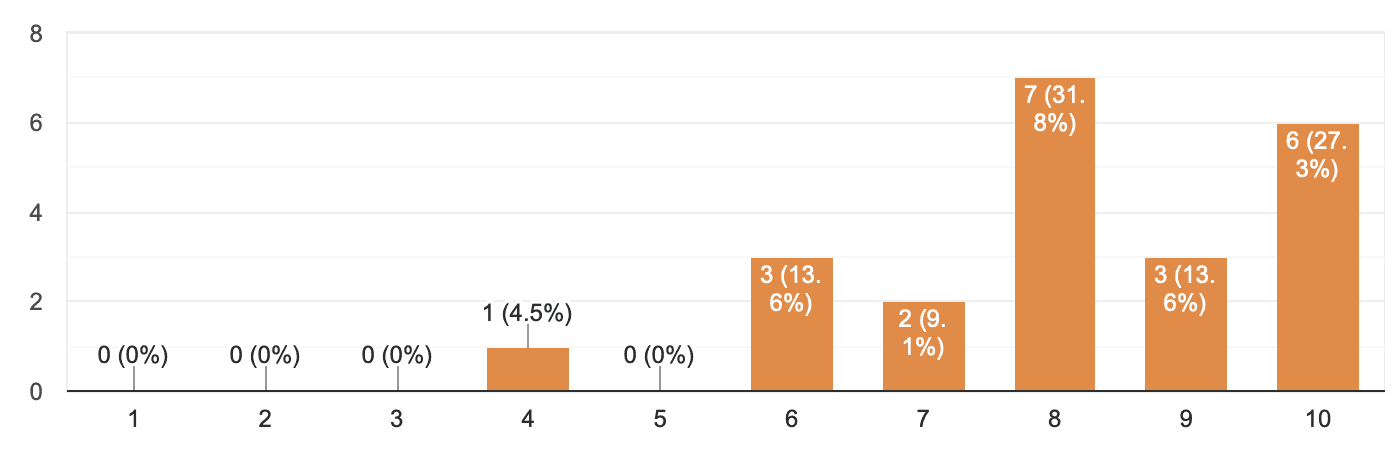
Through conversations and survey responses, we learned about users’ challenges, emotions, and decision-making. Transcribing interviews and organizing responses with affinity diagramming and dot-coding helped us identify patterns in frustrations, motivations, and barriers. This mix of qualitative and quantitative research highlighted unmet needs across different situations and provided a clear direction for feature ideation and design.
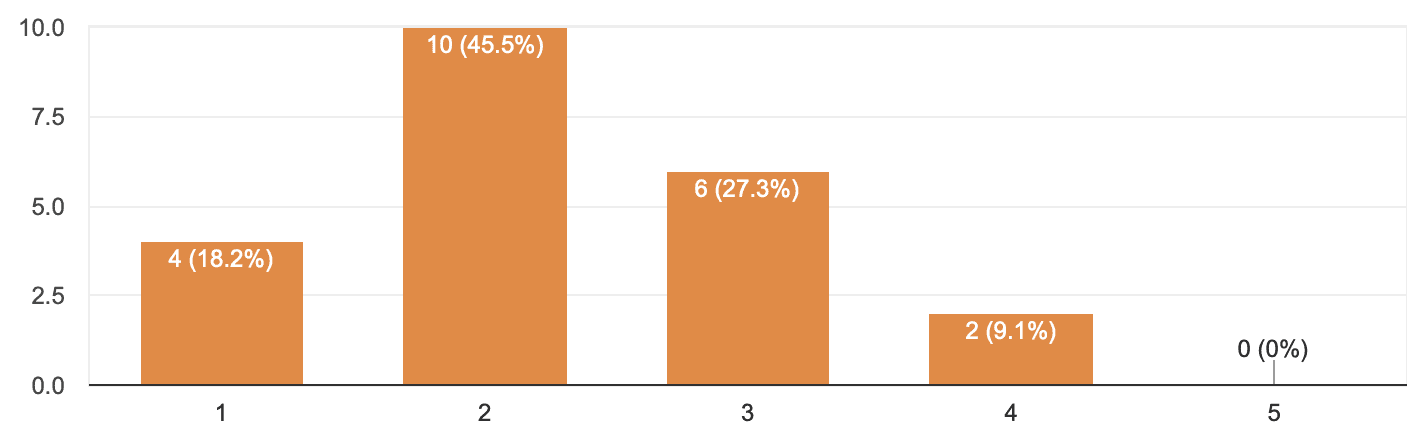
How prepared do you feel for a natural disaster?
How important is emergency preparedness to you?
how might we statement
How might we design a solution that simplifies planning and creates a space for people to seamlessly plan for, manage, and recover from a wildfire?
Recovery & Information -->
Insurance is often unclear or doesn’t cover enough.
Recovery is slow with little long-term help.
Info is scattered and hard to find.
People are left unsure where to turn next.
Discovery
With a large amount of research data, we synthesized findings to extract key insights and common themes.
We focused on users’ pain points and frustrations, goals and motivations, barriers, and environments to uncover patterns in how people search for and act on wildfire information and resources. These insights helped guide the next stage of conceptualizing features for Luma.
Insight Tools: Turning Research into Actionable Concepts
We used insight tools to make sense of our research findings and translate them into clear design directions for Luma.
We created a how might we statement, UX Map and a User Persona to organize and make sense of data collected from interviews and secondary research. These tools helped us identify key pain points, motivations, and behaviours, making sure our design decisions addressed real user needs and informed the features of Luma.
Communication & Awareness -->
Wildfire info is scattered and confusing.
Language barriers make access harder.
Mixed messages cause more confusion.
Everyone’s experience with wildfires is different.
Rural and vulnerable groups get limited support and services.
Aid is slow, shelters are packed, and mental health help is scarce.
Emergency gear and insurance are too expensive for many families.
Recovery & Information -->
Insurance is often unclear or doesn’t cover enough.
Recovery is slow with little long-term help.
Info is scattered and hard to find.
People are left unsure where to turn next.
how might we statement
How might we design a solution that simplifies planning and creates a space for people to seamlessly plan for, manage, and recover from a wildfire?
Discovery
We conducted user interviews and surveys to understand real experiences with wildfires, then synthesized our findings to uncover key themes and actionable insights.
Through conversations and survey responses, we learned about users’ challenges, emotions, and decision-making. Transcribing interviews and organizing responses with affinity diagramming and dot-coding helped us identify patterns in frustrations, motivations, and barriers. This mix of qualitative and quantitative research highlighted unmet needs across different situations and provided a clear direction for feature ideation and design.
How prepared do you feel for a natural disaster?
How important is emergency preparedness to you?
user persona
Strategize
We used insight tools to make sense of our research findings and translate them into clear design directions for Luma.
We created a how might we statement, UX Map and a User Persona to organize and make sense of data collected from interviews and secondary research. These tools helped us identify key pain points, motivations, and behaviours, making sure our design decisions addressed real user needs and informed the features of Luma.
how might we statement
How might we design a solution that simplifies planning and creates a space for people to seamlessly plan for, manage, and recover from a wildfire?
Design
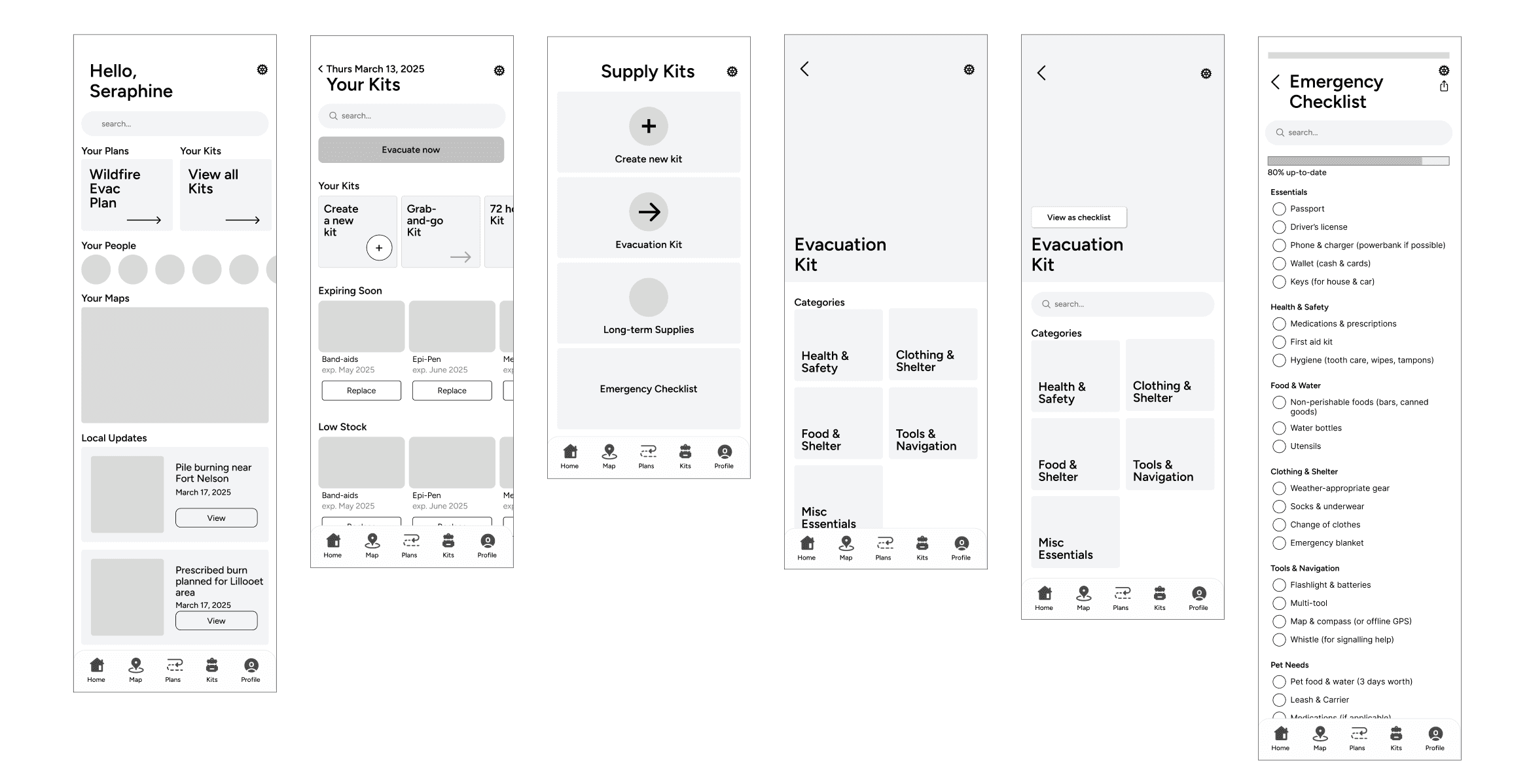
Based on research and insight tools, we created wireframes to visualize core features and tasks. These were tested through one-on-one user interviews to refine interactions and ensure usability.
The wireframes focused on essential flows, including receiving alerts, planning evacuations, and sharing resources. Feedback from testing informed adjustments to layout, navigation, and feature accessibility.
Design
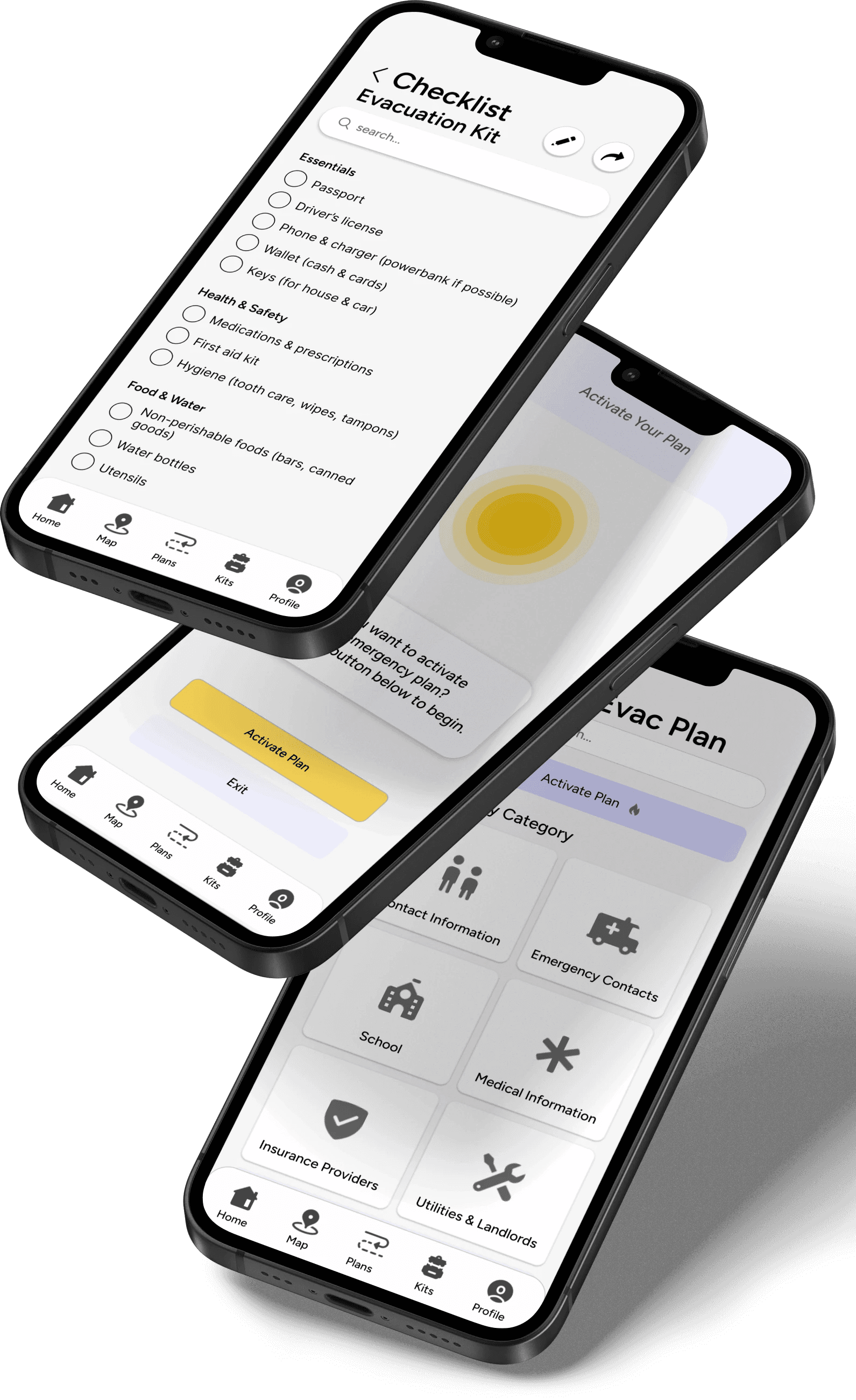
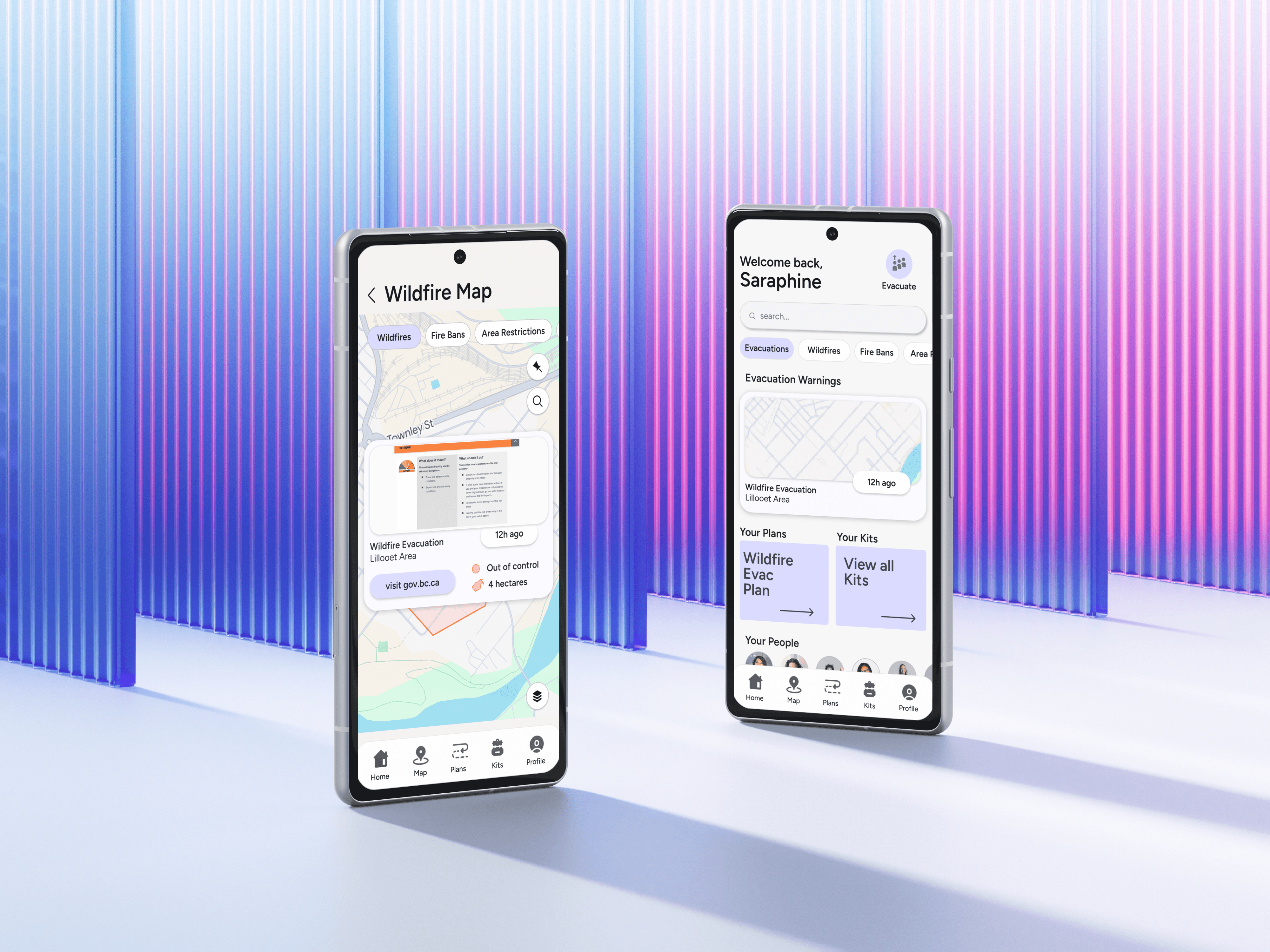
After incorporating feedback from earlier testing, we focused on visual design and developed high-fidelity prototypes to finalize Luma.
Using research insights and user feedback, we established a consistent brand identity, type scale, and color palette. We then prototyped core user flows to visualize the experience, test interactions, and refine navigation, ensuring the app was intuitive, cohesive, and supportive for users during wildfire emergencies.
Impact
Luma turns the overwhelming process of wildfire preparedness into a supportive companion, providing real-time alerts, easy plan sharing, and accessible recovery resources to help individuals and communities stay safe when it matters most.
During wildfires, Luma helps BC residents navigate uncertainty with step-by-step guidance, real-time alerts, and tools to share plans and resources.
Thank you for your curiosity
Created by hand with love ᥫ᭡ using framer
Thank you for your curiosity
Created by hand with love ᥫ᭡ using framer
reflection
Taking time to reflect, here's what I learned throughout this project:
This project was not only about designing a solution, but also about learning how to improve my process as a designer. Along the way, I made mistakes and discovered areas where I could grow. These lessons shaped how I approach collaboration, research, and design today.
Key Learnings
Narrowing the scope of the project earlier. Our scope was too broad and we had to backtrack because we realize the vastness of topics would make the project unfeasible.
Document decisions throughout the process so it’s easier to track the “why” behind design choices.
Taking time to develop more thoughtful interview questions to make sure we were getting the right information from our participants
Digging deeper into the why? Why are we designing this? The audience we were solving for was so niche we couldn't find anyone to interview who would actually fit the audience for the project.
Digging deeper into the why? Why are we designing this? The audience we were solving for was so niche we couldn't find anyone to interview who would actually fit the audience for the project.
Prioritize key features earlier on to avoid spending time prototyping ideas that didn’t add value.
We realized people didn't really want to prepare for emergencies. This would have been a great opportunity to add gamification to the project to turn a laborious task into something fun that people actually want to use regularly.
Setting up a stronger brand identity and design system initially. We didn't have much time to design everything (2 weeks) so managing out time better and beginning to think about visuals earlier on would've helped the process.
Improved file organization and checking in with the team more frequently to make sure everyone is aligned, especially around branding decisions.
Thank you for your curiosity
Created by hand with love ᥫ᭡ using framer