Research | FEature creation
Run together with Strava's Group Routes
Run together with Strava's Group Routes
Run together with Strava's Group Routes
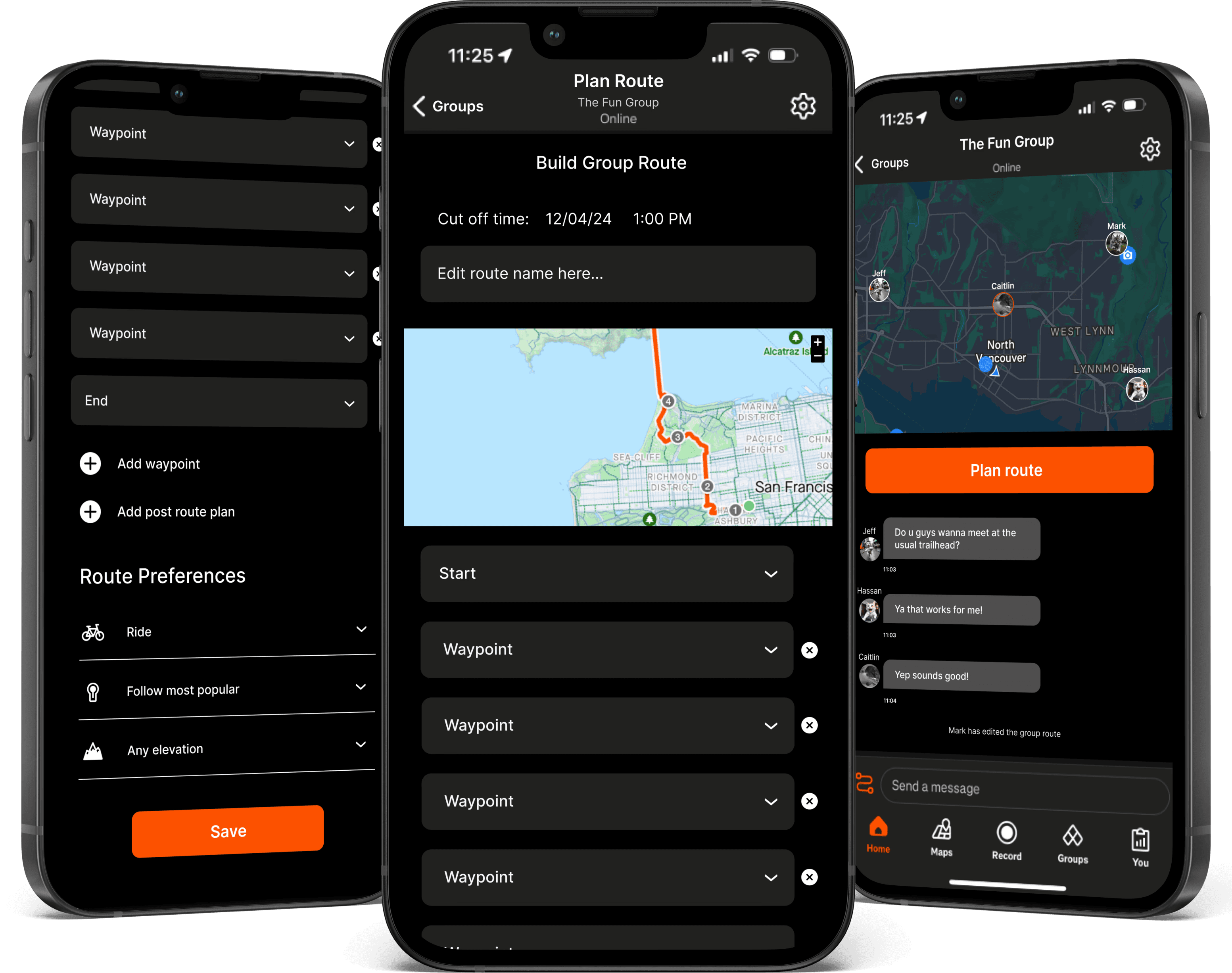
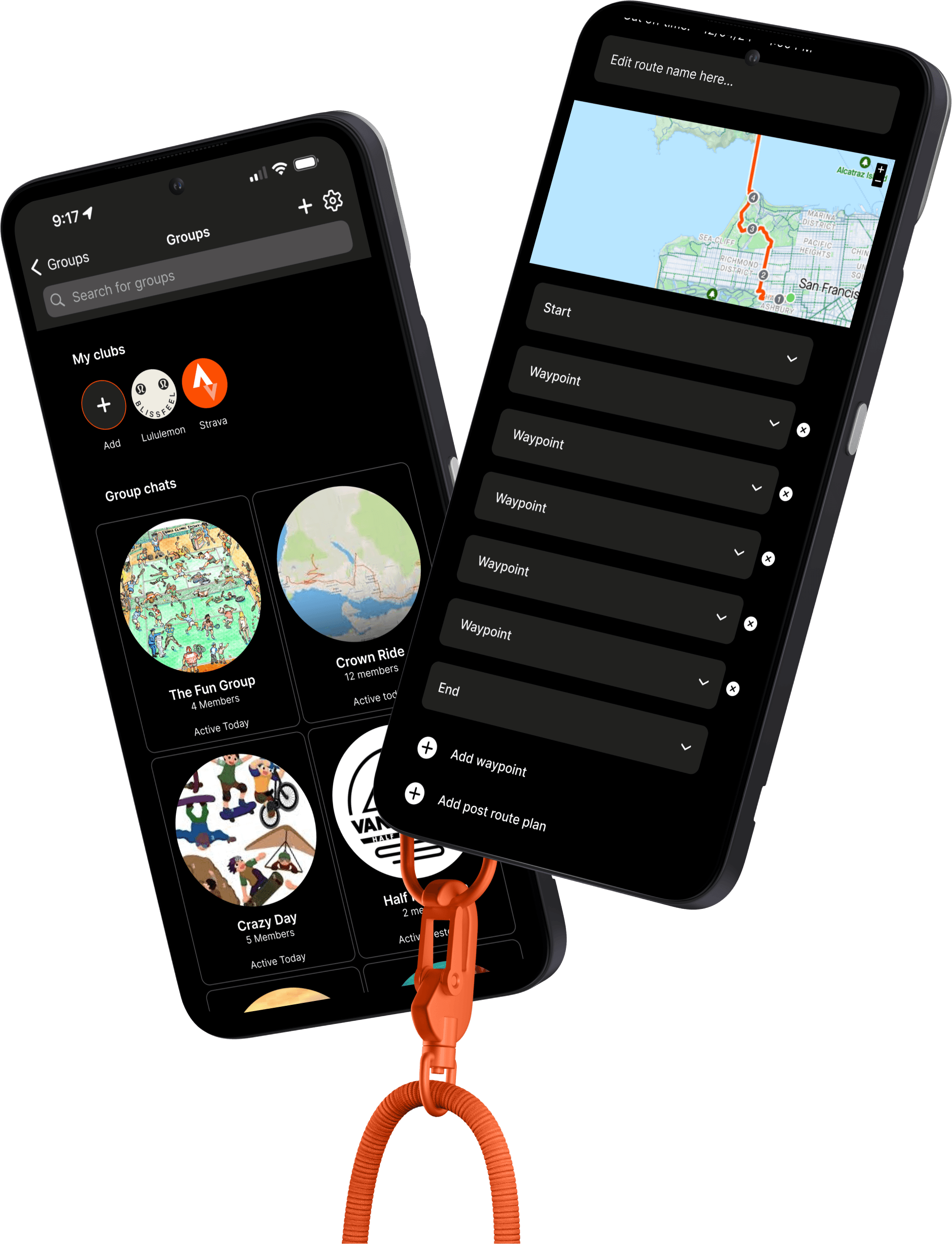
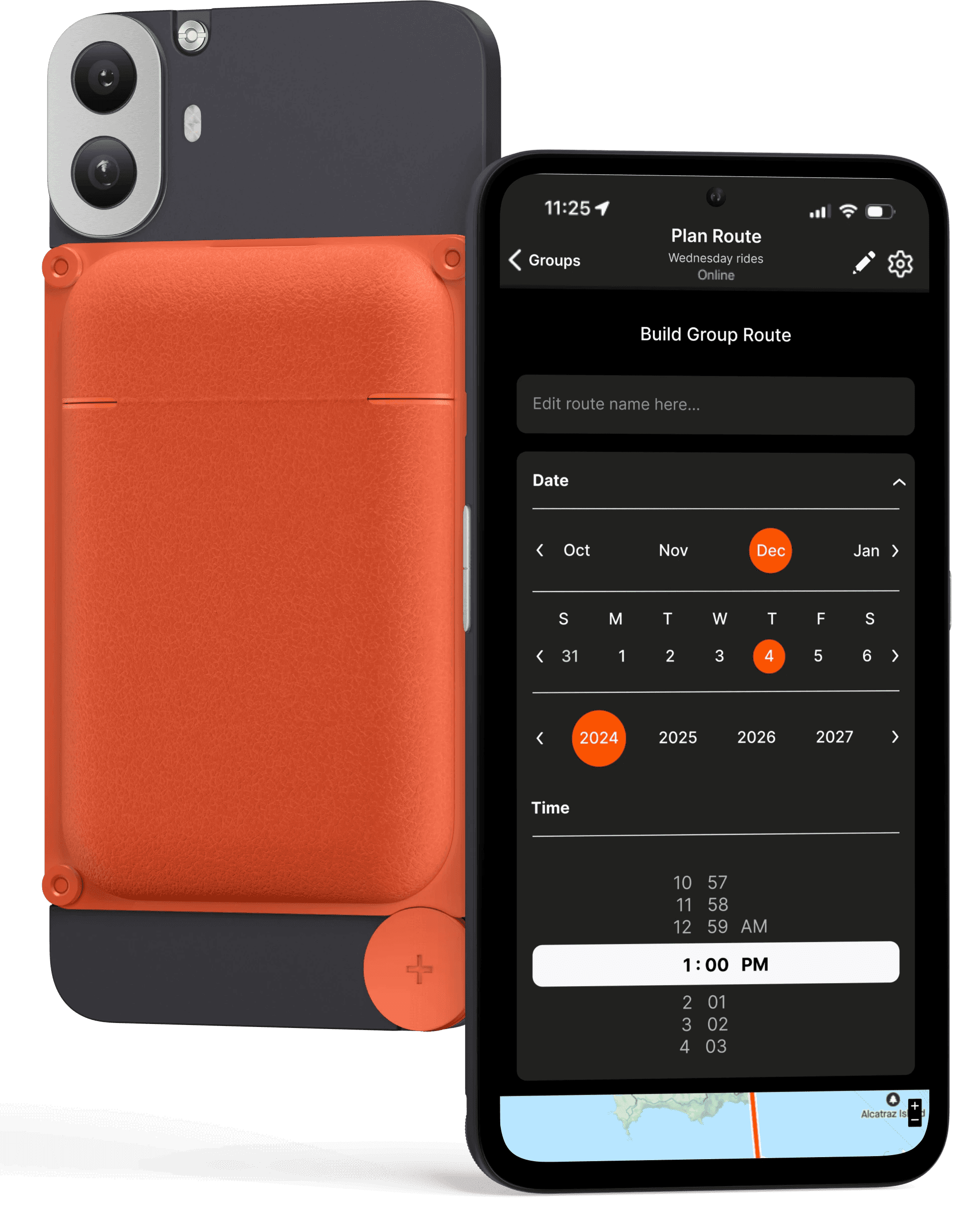
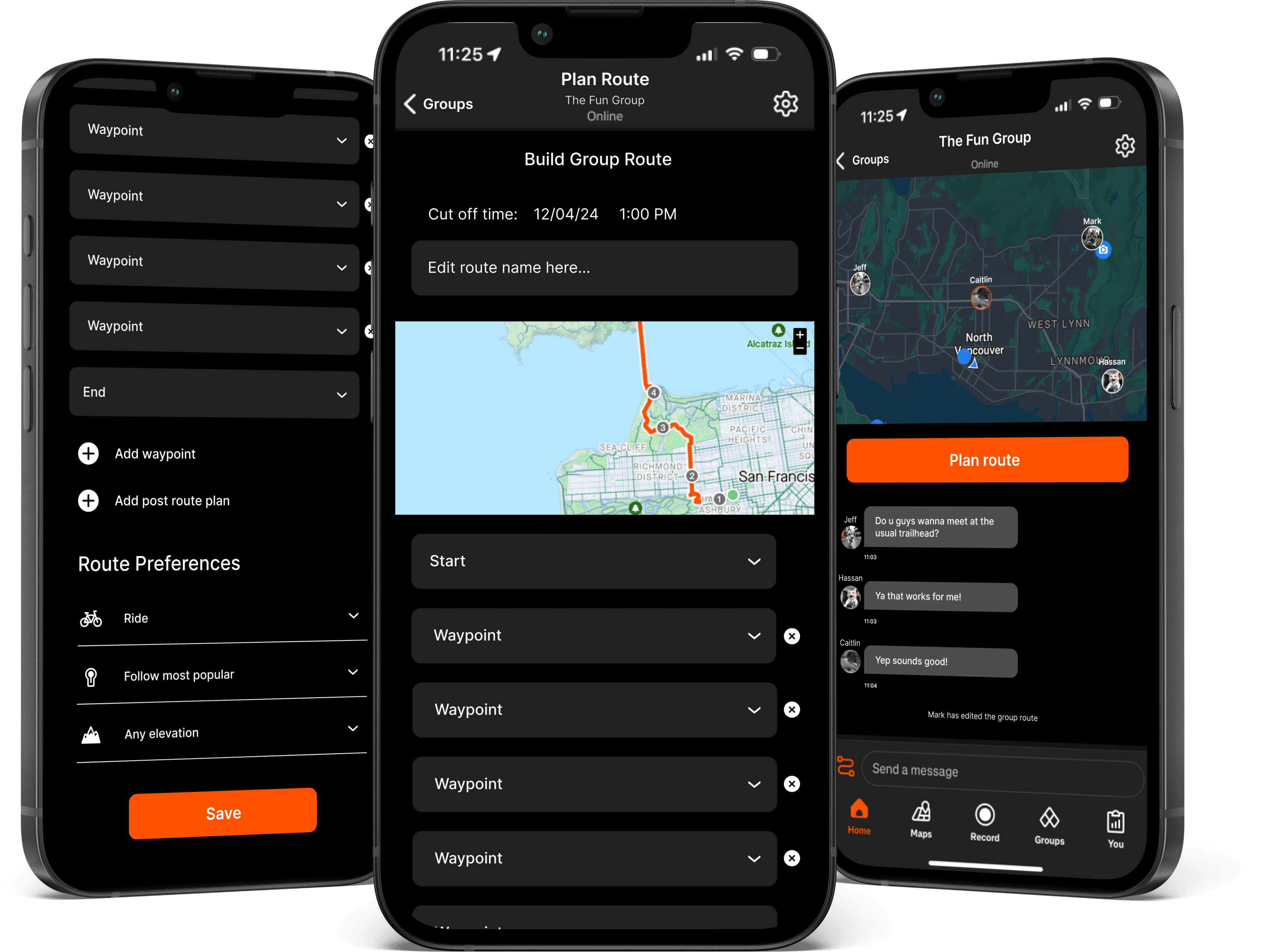
Group Routes makes it easy for friends to plan custom routes together by adding edits, waypoints, and post-ride plans to coordinate, share highlights, and stay connected.
Group Routes makes it easy for friends to plan custom routes together by adding edits, waypoints, and post-ride plans to coordinate, share highlights, and stay connected.
Group Routes makes it easy for friends to plan custom routes together by adding edits, waypoints, and post-ride plans to coordinate, share highlights, and stay connected.
UX Research
Visual Design
Interaction Design
Prototyping
THE PROBLEM
Friends often struggle to plan and coordinate runs and rides. Existing apps such as Strava lack strong collaboration features which makes it hard for friends to plan routes together, adjust details in real time, and coordinate activities beyond the ride.
THE PROBLEM
Friends often struggle to plan and coordinate runs and rides. Existing apps such as Strava lack strong collaboration features which makes it hard for friends to plan routes together, adjust details in real time, and coordinate activities beyond the ride.
THE PROBLEM: lack of collaboration
While Strava excels at tracking and sharing solo achievements, it falls short when it comes to helping friends collaborate. Users struggle to plan routes together, make live adjustments, or organize group activities seamlessly.
The Solution: Designing for Collaboration
To address the lack of collaboration on Strava, we introduced Group Routes — a feature that allows friends to co-create and edit custom routes, add waypoints, and plan post-ride activities directly within the app.
This feature transforms route planning from an individual task into a shared experience. By making it easier for users to plan together, Group Routes strengthens community, fosters connection, and makes Strava feel more social and inclusive.
Discover
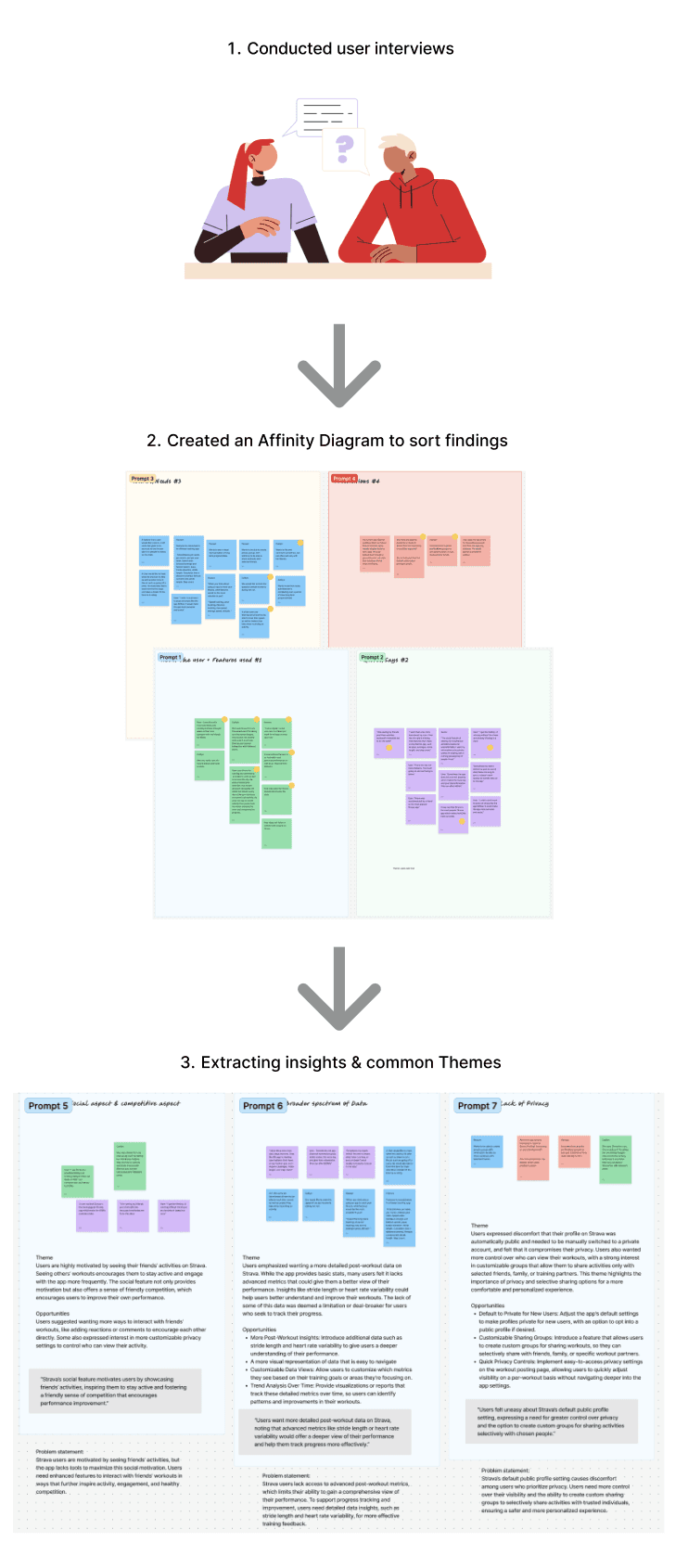
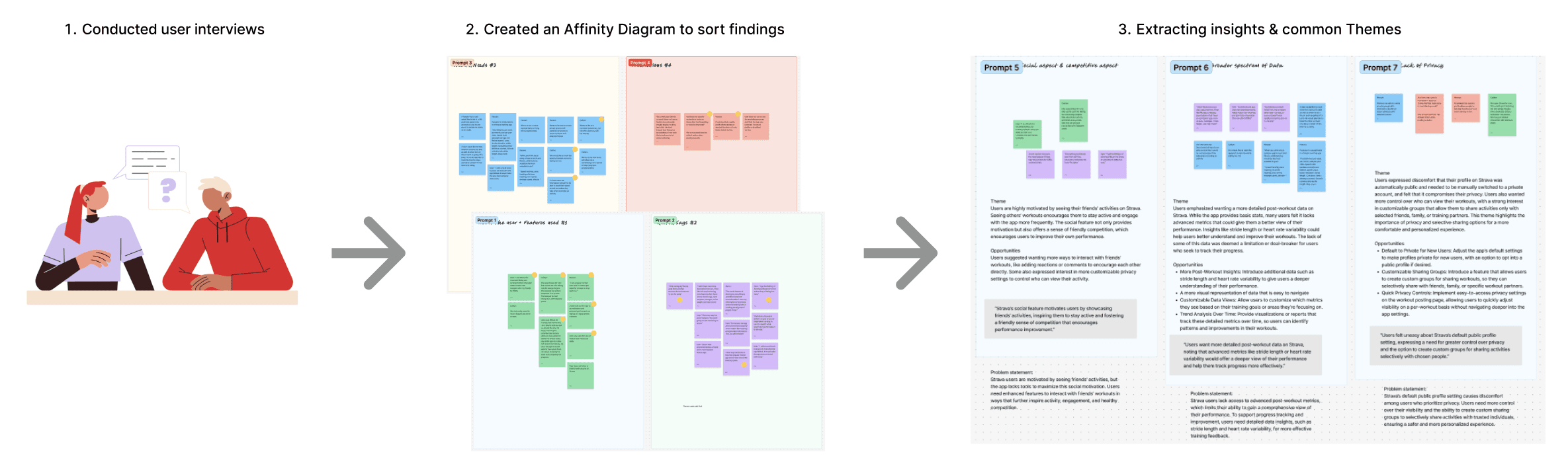
To discover what users were missing on Strava, we conducted a series of user interviews.
We ran one-on-one interviews with Strava users to uncover pain points around group ride planning. Insights from these interviews revealed opportunities for a collaboration feature to make Strava more social, seamless, and user-friendly.
Cyclists and runners value the social aspect of Strava as much as performance tracking, yet the current interface makes it difficult to plan together and adjust group rides. This gap creates frustration and missed opportunities for connection, highlighting the need for more community-driven features within Strava.
Cyclists and runners value the social aspect of Strava as much as performance tracking, yet the current interface makes it difficult to plan together and adjust group rides. This gap creates frustration and missed opportunities for connection, highlighting the need for more community-driven features within Strava.
Ideation
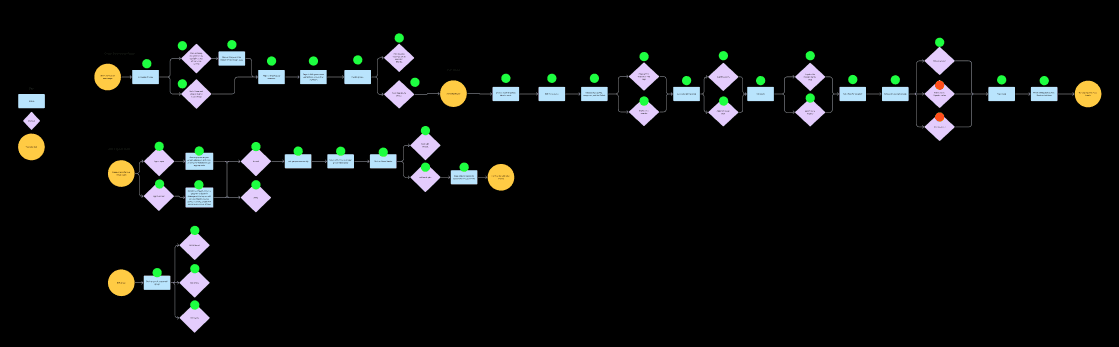
Once we identified collaboration as a key opportunity within Strava, we used insight tools to visualize and bring our early concepts to life.
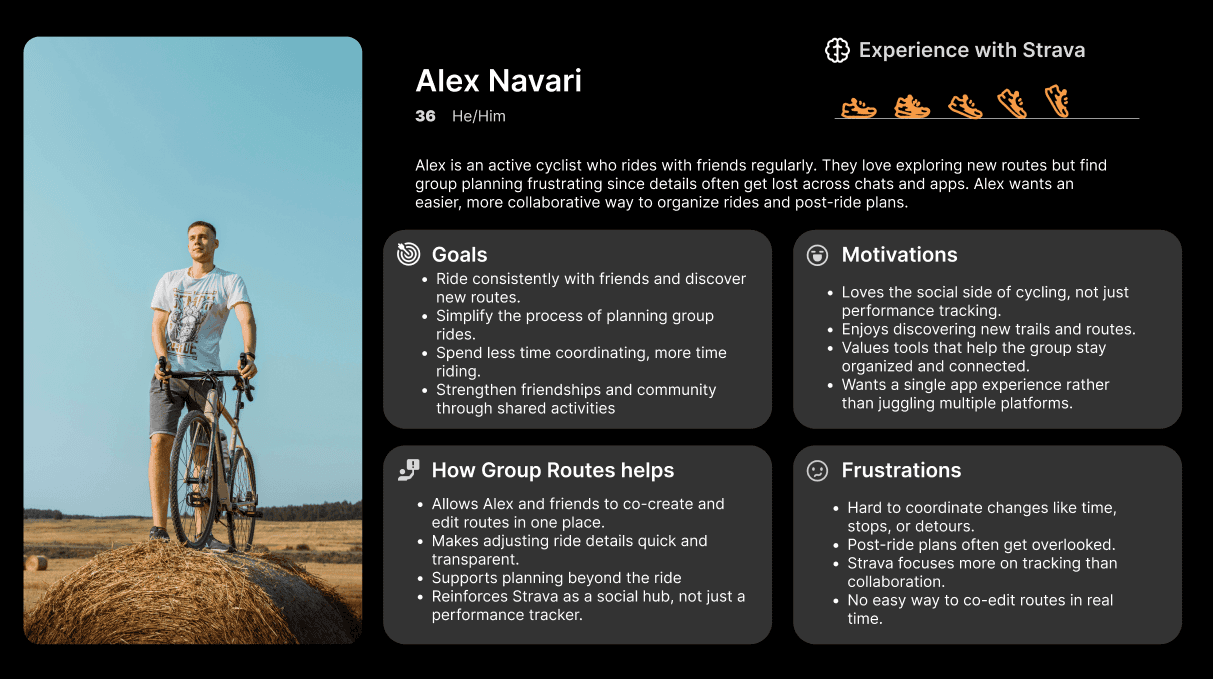
Creating personas and user flows gave us a clearer picture of who we were designing for and how they might engage with new collaboration features. It helped transform abstract ideas into tangible experiences, guiding our next steps as we began sketching and prototyping.
Design
We quickly sketched out wireframes of our core flows and began creating high-fidelity mockups.
Wireframing helped us establish the basic layout and flow, while the high-fidelity mockups brought clarity to the interface and ensured alignment in branding.
impact
Group Routes with strava allows for enhanced collaboration, better social engagement, and a more customizable experience
Group routes makes it easier for friends to plan and adjust routes together (fostering teamwork), encourages group activities and post-route plans to strengthen community connections, and adds flexibility with editable routes and waypoints, catering to diverse user needs.
IMPACT
Group Routes with strava allows for enhanced collaboration, better social engagement, and a more customizable experience
Group routes makes it easier for friends to plan and adjust routes together (fostering teamwork), encourages group activities and post-route plans to strengthen community connections, and adds flexibility with editable routes and waypoints, catering to diverse user needs.
impact
Group Routes with strava allows for enhanced collaboration, better social engagement, and a more customizable experience
Group routes makes it easier for friends to plan and adjust routes together (fostering teamwork), encourages group activities and post-route plans to strengthen community connections, and adds flexibility with editable routes and waypoints, catering to diverse user needs.
reflection
Taking time to reflect, here's what I learned throughout this project:
This project highlighted the importance of digging deeper into both user needs and brand context before jumping into design solutions. While I was able to identify key opportunities for improving collaboration, I realized there were moments where I could have slowed down and refined my approach. By asking better, unbiased questions during interviews, spending more time iterating on low-fidelity wireframes, and analyzing Strava’s brand and user motivations more closely, I would have uncovered richer insights and created an even stronger foundation for the final design. This project ultimately showed me how research depth and deliberate iteration are critical for tackling complex design challenges.
Key Learnings
Ask better, unbiased interview questions to gather the most useful insights.
Spend more time testing and iterating on low-fidelity wireframes before mockups.
Conduct a deeper analysis of the brand and why/how people use it.
Validate design assumptions with users earlier in the process.
Keep team alignment consistent through regular check-ins and shared feedback.
Prioritize key features earlier on to avoid spending time prototyping ideas that didn’t add value.
Balance creative ideas with evidence-based decision-making.
Thank you for your curiosity
Created by hand with love ᥫ᭡ using framer
Thank you for your curiosity
Thank you for your curiosity
Created by hand with love ᥫ᭡ using framer